2026 Mid-Year Market Outlook

Our 12-month outlook explores how the AI investment cycle, evolving rate dynamics, and geopolitical developments are reshaping markets, while highlighting where selectivity, diversification, and income opportunities may be most compelling. Across asset classes and regions, we outline actionable themes to help investors navigate a more complex, higher-yielding environment.

What’s Changing—And What It Means for Investors

The effects from the conflict in the Middle East are reflected by thicker left-tail risks. Yet, the AI buildout, global fiscal stimulus, and resiliency of high-end consumers support accelerating growth and above-target inflation in the U.S. as well as middling, durable growth in Europe and China.


Portfolio Considerations

  • Real assets, such as real estate, commodities, and infrastructure, offer a partial hedge against elevated inflation
  • A constructive base case with prominent tail risks calls for caution on broad-market beta and greater emphasis on alpha opportunities, i.e., relative value, regional, sector, and single-name selections
  • Global growth equities can harness prevailing tailwinds
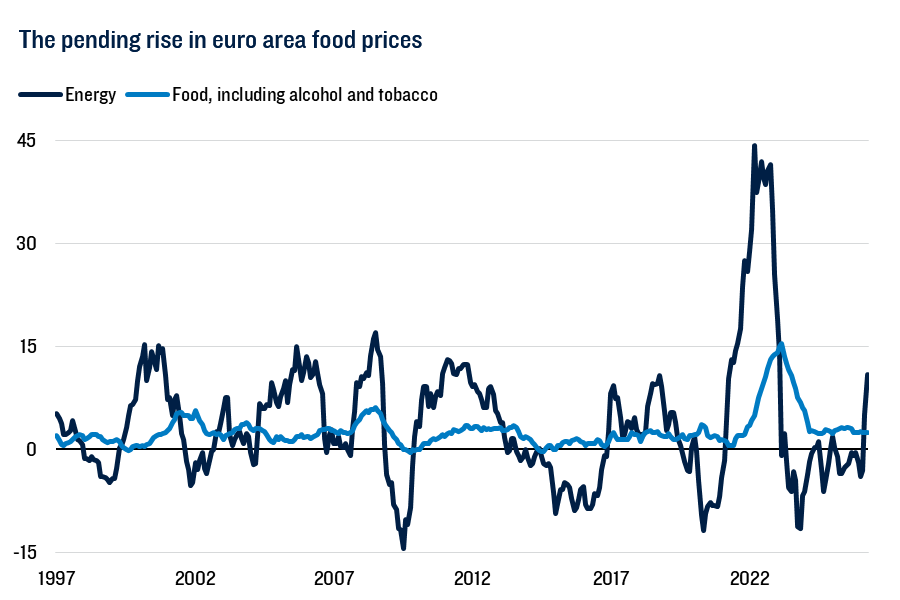
Euro area annual inflation: energy highly volatile with 2022 spike, food steadier, rising modestly then easing (1997–2026).
Euro Area food and energy inflation, annual % change. Source: PGIM and Macrobond. As of April 2026.

Elevated, range bound interest rates combined with compressed credit spreads indicate an environment where attractive all-in yields may translate into solid long-term returns. Although credit fundamentals remain solid, issue selection is paramount given valuations and looming tail risks. 


Portfolio Considerations

  • Multi-sector fixed income exposure with risk flexibility
  • Global bonds for a broader opportunity set and diversification
  • Short-duration credit amid monetary policy and inflation uncertainty
  • High-quality securitized credit, including asset-based finance and CLOs
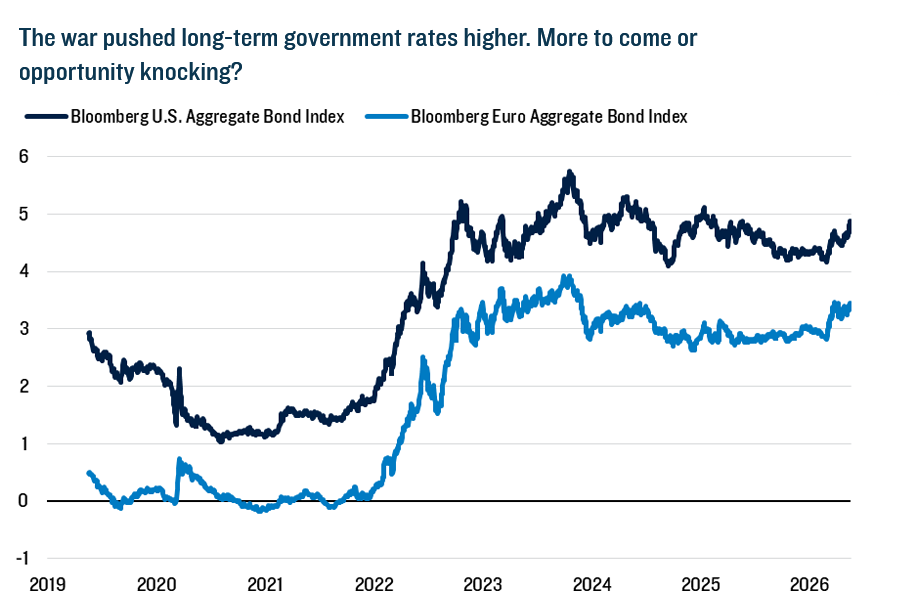
U.S. and European bond yields rose sharply from 2021, with U.S. consistently higher and both stabilizing into 2025–2026.
U.S. and European Aggregate Bond Indices, Yield-to-Worst %. Source: Bloomberg. As of May 2026.

Private credit offers broad diversification opportunities—ABF and infrastructure offer non-corporate credit risk with customization attributes. Direct lending with stringent underwriting standards can complement public credit exposure. Real estate offers diversification amidst its prolonged, early cycle stage, supported by structural factors and tactical opportunities.


Portfolio Considerations

  • Direct lending, including credit secondaries, with stringent underwriting standards
  • Public-private credit strategies guided by a flexible relative value framework
  • Private real estate, REITs for diversification, inflation protection, and the sector’s early-cycle characteristics
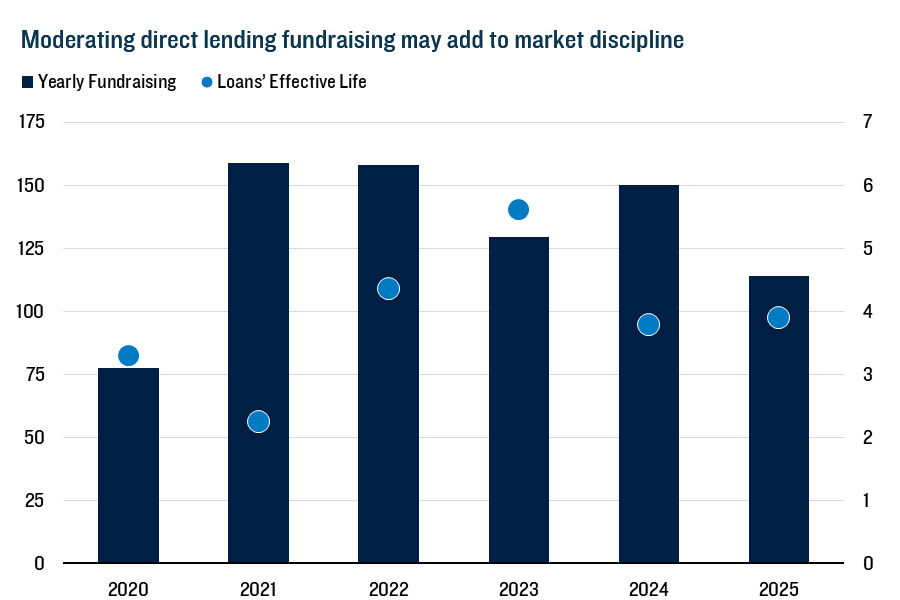
Yearly fundraising (USD bn) peaked in 2021–22 then declined; loan effective life rose to 2023, then eased slightly into 2025.
Left: yearly fundraising, USD billion. Right: loans, effective life, years. Source: S&P Global, WithIntelligence. As of April 2026.

The effects of the AI buildout will continue to emerge, highlighting the need to identify winners that can capitalize on multi-year opportunities bolstered by innovation, durable competitive moats, and sector leadership.


Portfolio Considerations

  • Global growth equity as AI adoption accelerates
  • Private real estate for exposure to the AI-infrastructure buildout
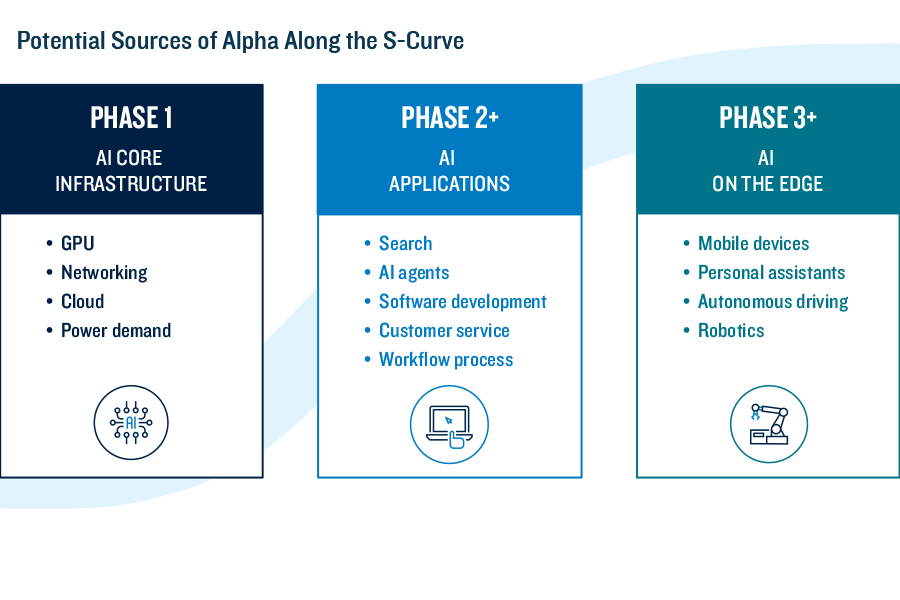
Potential sources of AI alpha across phases: infrastructure (GPUs, cloud), applications, then edge (devices, robotics) along an S-curve.
Source: Jennison. For illustrative purposes only.

Webinar Replay: Rising Rates, Resilient Markets

PGIM experts discuss the mid-year horizon with the persistence of higher long-term interest rates and what it means for markets, economies, and portfolios.

Three PGIM experts who will discuss the global forces driving long-rates higher during the mid-year outlook webcast.

Another Economic Tailwind over the Coming Decade

A significant, underappreciated global growth tailwind is emerging: synchronized government investment in defense and economic security. This could fuel near-term earnings in industrials and technology, while unlocking potential long-term opportunities in advanced sectors. Investors positioned to bridge funding gaps in innovation stand to benefit from sustained, policy-backed demand.

Download Transcript

2026 MID-YEAR MARKET OUTLOOK

Explore the forces reshaping markets and the nuanced opportunities emerging across asset classes over the coming 12 months.

Explore Our Asset Class Views

Our asset class views provide additional insights across the following markets:

Fixed Income


Fundamental Equity


Multi-Asset

Real Estate

10-Year Capital Market Assumptions

Our Capital Market Assumptions guide long-term outlooks and strategic allocations across select strategies and multi-asset portfolios.

5557339